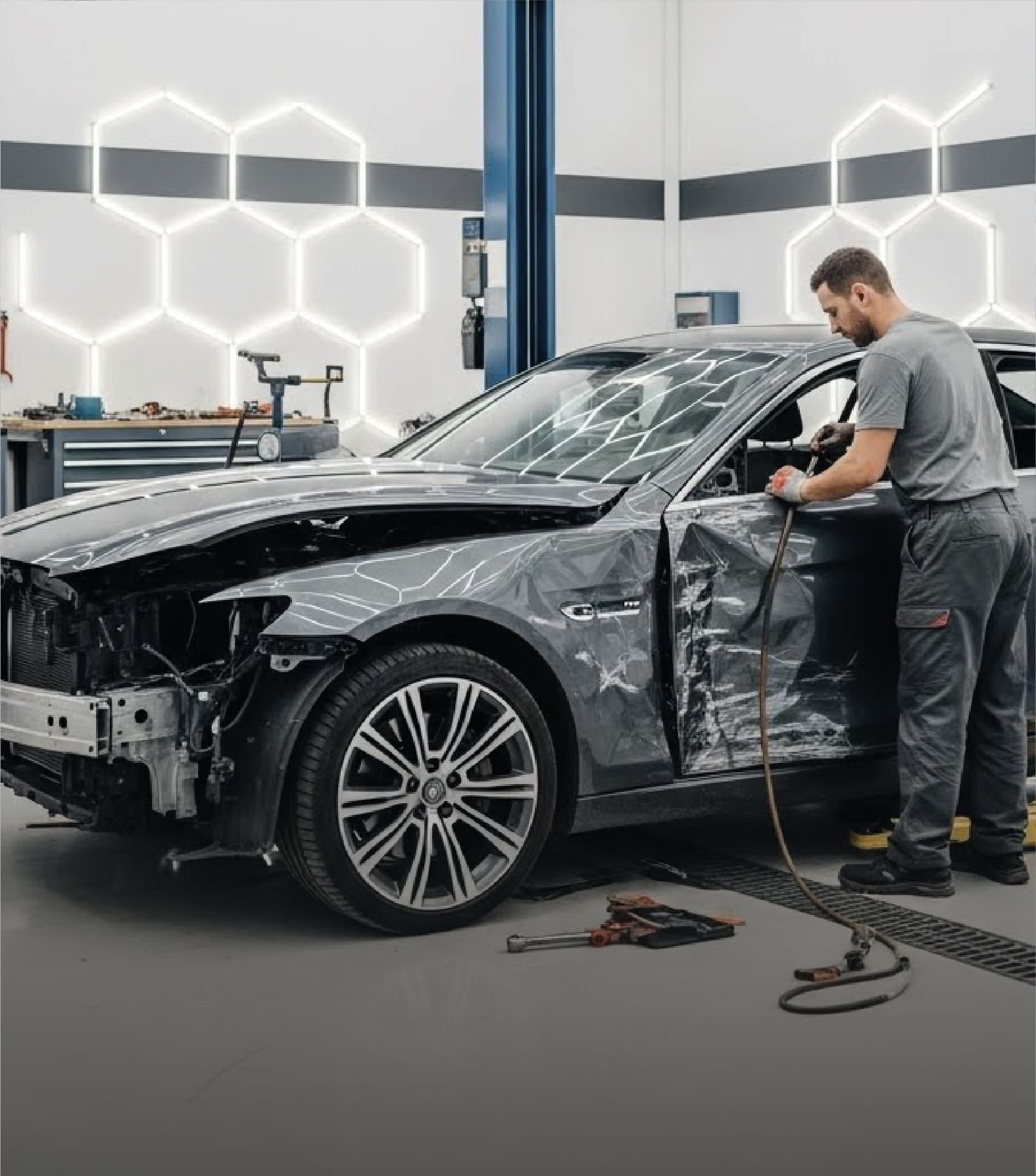
A vehicle is considered a total loss in California when the cost to repair it exceeds roughly 75-80% of its actual cash value - though each insurer sets its own threshold. Understanding the difference between a total loss and repairable collision damage helps you make smarter decisions after an accident, whether that means fighting for a fair payout or getting your car back on the road. NoHo Collision Center at 12525 Sherman Way, North Hollywood, CA 91605 offers free estimates so you know exactly where you stand before you commit to anything.
Frame Damage vs Body Damage: What Actually Drives Repair Cost
Not all collision damage looks the same under the surface. A car can have crumpled sheet metal and still be 100% repairable - and another car can look fine from the outside but have a bent or twisted frame that triples the repair bill. That distinction matters more than almost anything else when you are figuring out whether to repair or total a vehicle.
Body damage refers to panels, bumpers, hoods, and exterior components. These parts get straightened or replaced, and in most cases the cost stays manageable. Frame damage is a different situation. Modern vehicles use either a traditional body-on-frame structure or a unibody design - and roughly 90% of passenger cars and crossovers sold in California today are unibody. When the structural rails or core support get bent, a certified shop needs a computerized frame machine to measure tolerances down to the millimeter. That process takes time and skilled labor, which pushes costs up fast. At NoHo Collision Center, our estimators separate structural from cosmetic damage in every inspection so you get an accurate picture, not a rough guess.
- Minor frame damage on a unibody car typically adds $1,500-$4,000 to a repair bill compared to body-only work
- Severe frame twisting or crumple zone collapse can push costs past the insurer's total loss threshold even on newer vehicles
- Request a written structural inspection report before accepting any total loss determination from your insurance company
- A certified shop using OEM repair procedures can restore structural integrity - aftermarket shortcuts on frame work create long-term safety risks
OEM vs Aftermarket Parts: Why the Choice Matters More Than You Think in a California Body Shop
After a collision, your insurer may push for aftermarket parts to keep costs down. In California, insurers are legally required to disclose when non-OEM parts are specified in a repair estimate - but that does not stop them from steering you toward a shop that uses them. The practical difference between OEM parts (Original Equipment Manufacturer) and aftermarket alternatives shows up in fit, finish, safety ratings, and how long the repair actually holds up.
OEM parts are built to the same specifications as what came off the factory floor. Aftermarket parts are produced by third-party manufacturers, and quality varies widely. Studies from the Certified Collision Industry Program show that aftermarket parts require additional labor corrections on roughly 20-30% of installations - meaning the "cheaper" part often isn't cheaper once you account for the extra time. Our certified technicians at NoHo Collision Center use OEM parts exclusively on every repair, which is one reason we can back every job with a lifetime warranty. We hold 14 manufacturer certifications, including BMW, Hyundai, Genesis, Nissan, Kia, Mazda, Alfa Romeo, and more - and each certification requires us to follow that brand's specific repair procedures using approved parts. If you drive a Hyundai or Genesis, our Hyundai Certified Body Shop in Toluca Lake, CA team follows factory documentation at every step, which protects your warranty and your safety rating.
KEY FACTS
- ✓ California's total loss threshold is typically 75-80% of actual cash value - varies by insurer
- ✓ OEM parts match factory tolerances; aftermarket parts require rework on 20-30% of installs
- ✓ A lifetime warranty on collision repair covers defects in workmanship with no expiration date
- ✓ NoHo Collision Center holds 14 manufacturer certifications and uses OEM-only parts on every repair at 12525 Sherman Way, North Hollywood
Lifetime Warranty vs Limited Warranty on Collision Repair: What the Fine Print Means
When you are choosing a body shop in California, the warranty behind the repair is not a small detail - it is one of the clearest signals of how confident a shop is in its own work. Most shops offer a limited warranty that covers workmanship for one to three years and excludes a long list of conditions. A lifetime warranty, like the one NoHo Collision Center provides, covers defects in workmanship for as long as you own the vehicle, with no time limit and no hidden carve-outs.
Here is where this connects directly to the total loss question: a properly repaired vehicle - one that used OEM parts, followed manufacturer procedures, and came with a lifetime warranty - holds its resale value far better than one repaired with aftermarket components or shoddy bodywork. If you are on the fence about whether to repair or accept a total loss settlement, the quality of the repair work available to you is part of that calculation. A repair backed by a lifetime warranty at a manufacturer-certified shop is a different product than a cheap fix at an uncertified shop. NoHo Collision Center works directly with State Farm, Geico, Allstate, Progressive, Farmers, USAA, AAA, and Mercury - so we handle the insurance coordination while you focus on getting your car back. We also work with insurers for Lexus, Infiniti, and other luxury brands; if you drive a luxury vehicle in the Valley, our Lexus Certified Body Shop in Van Nuys, CA and Infiniti Certified Body Shop in Toluca Lake, CA pages lay out exactly what that process looks like for your specific model.
Why San Fernando Valley Drivers Choose NoHo Collision Center
NoHo Collision Center is located at 12525 Sherman Way, North Hollywood, CA 91605 - right in the center of the San Fernando Valley, with easy access from Burbank, Glendale, Studio City, Sherman Oaks, Van Nuys, Toluca Lake, Reseda, Panorama City, Woodland Hills, Chatsworth, and Canoga Park. We hold 14 manufacturer certifications, including BMW specialist status, and we use OEM parts exclusively - never aftermarket. Every repair we do comes with a lifetime warranty on workmanship, and our estimates are always free with no obligation. We work with every major insurer - State Farm, Geico, Allstate, Progressive, Farmers, USAA, AAA, Mercury - and we keep our process transparent with no hidden charges and no unnecessary delays. When you bring your vehicle to us after a collision, we inspect both body and structural damage, give you an honest assessment of whether repair makes sense vs. a total loss, and back up our work without time limits. Call 818-821-0425 or visit nohocollisioncenter.com to schedule your free estimate.
Get Your Free Estimate Today
Serving California and the entire San Fernando Valley
Get Free Estimate Call 818-821-0425Frequently Asked Questions
How do I know if my car is a total loss or repairable after a collision?
In California, a vehicle is typically declared a total loss when repair costs reach 75-80% or more of its actual cash value - the exact percentage depends on your insurance company. You have the right to get an independent estimate from a certified shop before accepting any total loss determination. NoHo Collision Center at 12525 Sherman Way, North Hollywood provides free structural and body damage inspections so you have accurate numbers before making that call.
How much more does frame damage repair cost compared to body-only damage?
Minor frame damage on a unibody vehicle typically adds $1,500 to $4,000 on top of body repair costs, depending on how many structural components are affected and how much computerized measuring and straightening is required. Severe frame damage involving crumple zone collapse or multiple rail bends can push total repair costs past the insurer's total loss threshold, particularly on older vehicles with lower actual cash value.
Can my insurance company force a body shop to use aftermarket parts in California?
California law requires insurers to disclose when non-OEM (aftermarket) parts are included in a repair estimate, but they can still specify aftermarket parts to reduce costs. You have the right to request OEM parts, though you may need to pay the difference if your policy does not cover them. NoHo Collision Center uses OEM parts exclusively on all repairs and works directly with State Farm, Geico, Allstate, Progressive, Farmers, USAA, AAA, and Mercury to negotiate OEM coverage whenever possible.
What is the difference between a lifetime warranty and a limited warranty on collision repair?
A limited warranty on collision repair typically covers workmanship defects for one to three years and excludes a range of conditions in the fine print. A lifetime warranty - like the one offered by NoHo Collision Center - covers defects in workmanship for as long as you own the vehicle, with no expiration date. The lifetime warranty signals that the shop stands behind its parts and labor without time limits, which also tends to reflect better resale value for the repaired vehicle.
Where can San Fernando Valley drivers get a free collision estimate and structural inspection after an accident?
NoHo Collision Center at 12525 Sherman Way, North Hollywood, CA 91605 provides free collision estimates and structural damage inspections for drivers throughout the San Fernando Valley, including North Hollywood, Burbank, Studio City, Sherman Oaks, Van Nuys, Glendale, Toluca Lake, Reseda, Panorama City, Woodland Hills, Chatsworth, and Canoga Park. Call 818-821-0425 to schedule your free estimate or get a same-day assessment on walk-in inspections.